
Which Way Forward
BUT
If you don’t know where you are going,
any road will do.
Part two of a two part article. If you want to know what part one was all about, well - that’s why we have hyperlinks.


The World Is Sensing It.
Over the past few days, a series of articles filtered to the top of my feeds, all talking about different aspects of this same structural gap that in turn coalesced around 4 questions.
1] Why do our most important assets - people, if you believe the organisational mantras - get relegated to HR?
❓ Have we hidden engagement inside a compliance system?
2] Does every organisation run on two charts - one visible, one invisible? We already know one is broken.
❓ Is the real work happening in the one nobody’s designing for?
3] What happens when you build community momentum as the primary growth engine, not the side effect?
❓ By launching another platform? OR by providing underserved networks the infrastructure they need to engage and better serve their communities.
4] What if your website isn't the problem and it's really just a symptom?
❓ Are you hiding broken strategy inside broken web infrastructure?
The Realisation
‘Systems of Record’ don’t produce engagement. They produce overhead.
Sensing Isn’t Solving.
Organisations see the gap. They meet. They talk about it. They all agree - and then they go back to their day job and wonder why it feels like pushing water uphill. The problems seem ‘wicked’ in nature.
They understand that relegating people to HR compliance systems doesn’t produce performance. They’re watching CRM vendors struggle. They know their ‘Systems of Record’ can’t be used in this new world. They are ready for ‘Systems of Engagement’.
But being ready isn’t the same as being able. The path from ‘we need this’ to ‘here’s how we do it’ needs different thinking to what got them there1.
The Business Equation Is Fundamental.
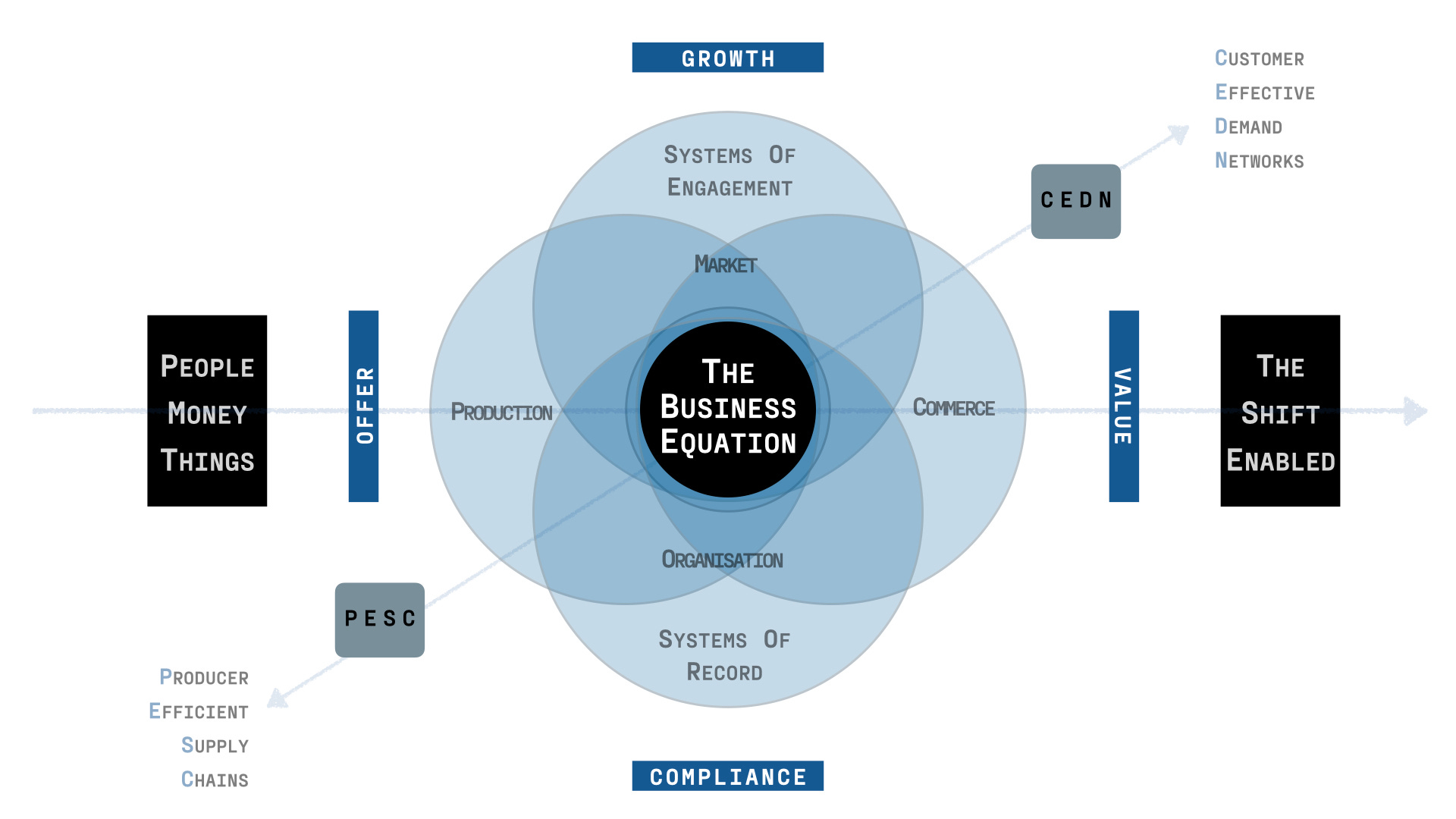
It isn't a framed manifesto for the lobby; it's the heartbeat of the business and the operating principle through which every decision filters. We aren’t just ‘thinking’ about People, Process, and Technology - we’re operationalising them in the only order that actually scales.
‘Systems of Record’ have historically often got this backwards - despite knowing better - optimising for the technology and data capture first. And then we wonder why they fail to engage. ‘Systems of Engagement’ turns it on its head: design for people, build the process around them and let the technology serve both.
Take websites. You need one, you have one.
Question - is it a cost or an investment?
I would venture that if it is built around who we are and what we want to say - in short a static digital bill board - it will be (rightly) seen as a cost. What if it was built around your business as a business growth asset? That’s how we flip it.2
We stop building systems that record people.
We start building systems that engage them.
One saves up to 100%. The other grows from 100% to - well, you tell me.
Who’s In. Who’s Watching. Who’s Building.
Over the years, many organisations have committed to this thinking - all over the world. You’d be surprised what has been done and who has put real money behind this thinking and approach.
Because here’s the thing: yes, the ‘Business Equation’ not only shows why ‘Systems of Engagement’ matter but also identifies which engagement systems?
And then - how to move from here to there?
The problem has been solved. The solutions are still assembling.
Solutions that
make invisible flows visible.
turn compliance machinery into engagement infrastructure.
let people actually see and act on what matters.
not with new tech - but better thinking.
not by replacing what you have - but building value around it.
not locking you in - but growing with you.
The conversations are happening. The commitments are real. The solutions are assembling. The question isn’t whether to pivot. It’s how fast you move.
If you’re sensing this. If you’re asking these questions. If you want to be part of building rather than watching - well ….
Many thanks for your attention. I look forward to talking.

We are building an assessment to help you get clarity, if you would like early access, drop me a line.
We remodel business data structures and extend into what a business needs to grow. We don’t rebuild the site, we extend it with features that the audience needs and at a stroke the site moves from a cost that nobody cares about and ignored because it is an overhead to a space that creates momentum by attracting visitors and engaging them.
The Rear View Mirror
The same can be said for Systems of Record.
This is the first of a two part issue. If you already know our history and are more interested in where we are going - then the next newsletter is for you.
‘They’ have their CRM. Where’s my VRM?1
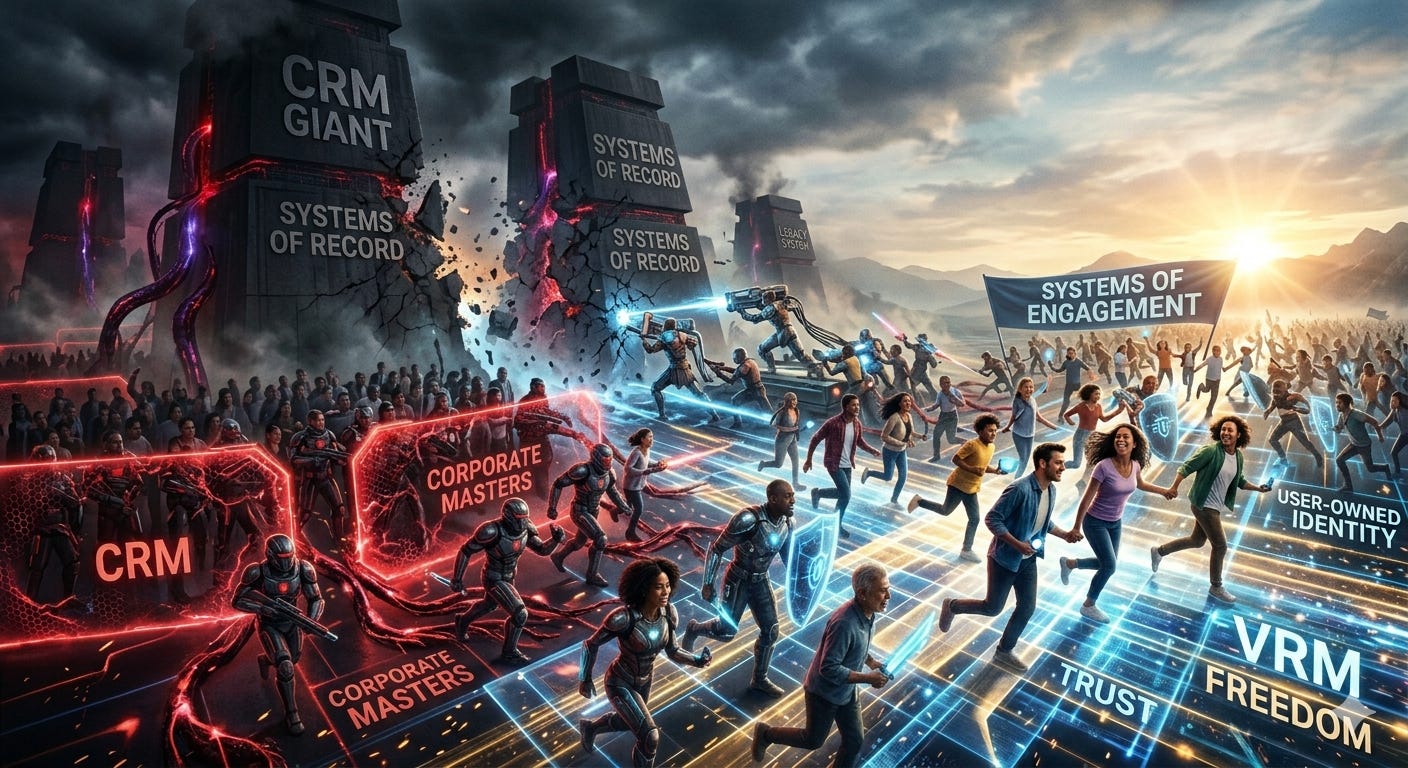
Before you get too excited - sorry this is not about that - but - the question has been my North Star for a couple of decades. It’s the itch that ‘Systems of Record’ couldn’t scratch, and the reason I spent my career working as a translator in rooms where the wrong problems were being solved with clinical precision.

The Translator in the Room.
My job was simple ..
Translate.
For technologists - competing to build smarter mousetraps and needing to explain themselves to ‘the market’.
For people - realising that the real problem isn't catching mice, it's that nobody's talking about why the mice are there in the first place.
I lived in that gap. I learned to speak both languages and discovered that software companies are brilliant at “solving the wrong problem really well”.2
It was a sign of the times - but they optimised for efficiency. For capture. For storage. For control. Systems of Record, designed to document what happened yesterday so they could save money today. And they locked you in. Built moats around the data. Made you dependent. That’s where the money was - still is for some. And at the time that was the right thing to do.
But to remix a couple of metaphors - if all you have is a hammer, by the time you get to where the puck is going, the problem might not be a nail anymore.
Tomorrow's problems can’t be solved with yesterday's tools.
I also learned that you can only save up to 100% of what you have BUT on the flip side - The Business Equation makes clear that there are no such limits to growth.
These learnings contributed to the foundation of ‘John2.0’ - People First. Process Second. Technology Third. And by ‘people’ I mean all people - customers, staff, vendors, partners, members … and knowing what each person needs to ‘improve their lot’ - not what the system wants to capture and a series of ‘truths’ informed how to build these new systems.
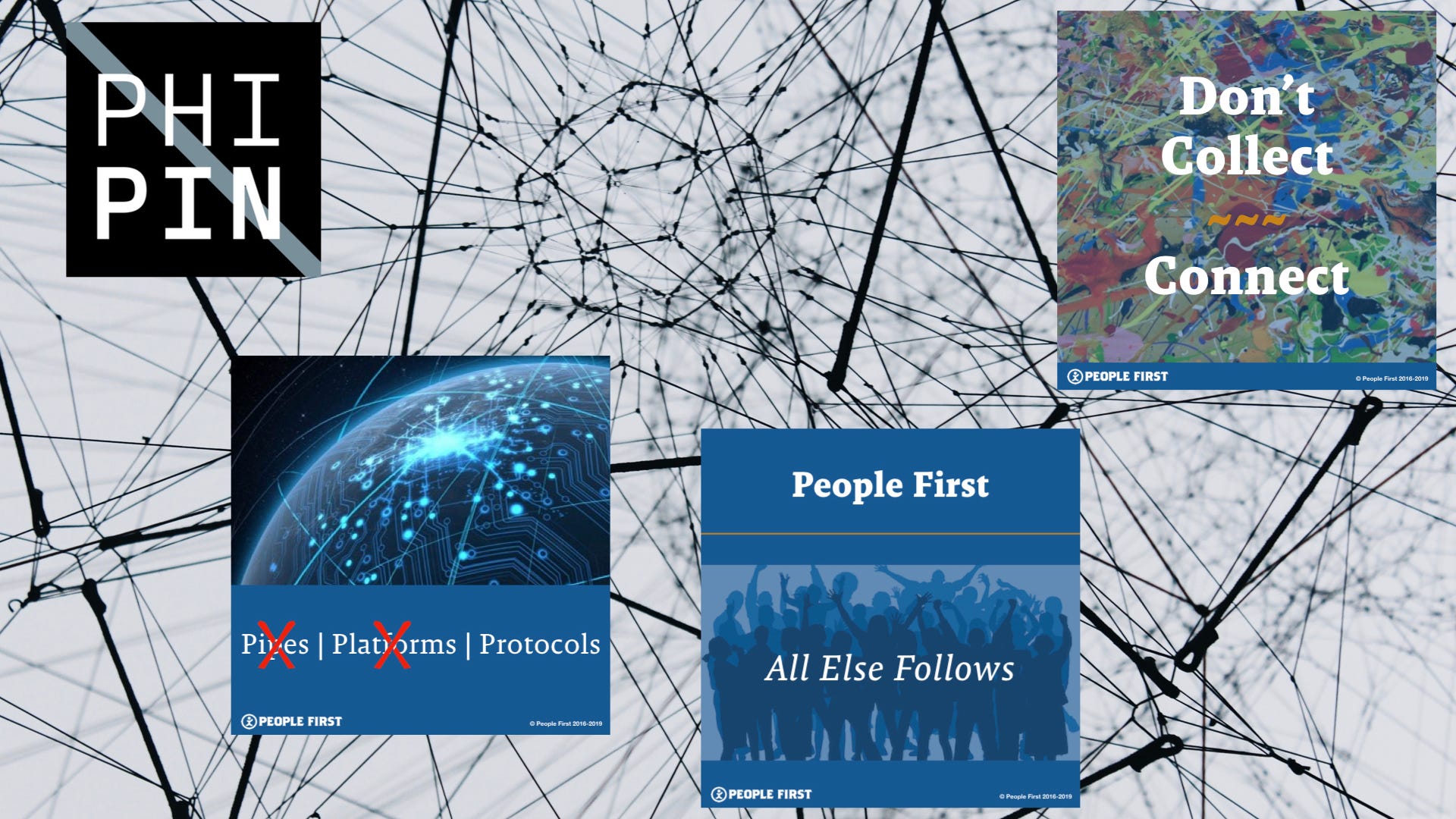
When I left People First ‘behind’ to start PHI⑊PIN3, it was only the name that changed. The foundation, the thinking, the frameworks all remained and are in constant use and now we build solutions on those principles. Not with a new tech stack. No reinvention of the wheel. Definitely not throwing away what works and absolutely building value through a three step process.
Think carefully.
Build what’s needed now.
Stay agile for the future.
Websites appear as outcomes not as the project. Solutions emerge from solving real problems, not from feature roadmaps. We move fast, faster than most. But every piece serves a purpose. Nothing exists for its own sake.
And here’s the thing:
We make money when our customers grow, not when they’re stuck.
The sunset in the rear view is clear. Yesterday is over and tomorrow is a new day.
Will it be exactly the same as yesterday? No. So why are you doing the same thing?
Each of us has one history - and many possible futures.
Which future is all to do with the choices you make today.
Want to talk more?
Joyce Searls (yes - that Joyce) posed this question years ago in the early days of Vendor Relationship Management (VRM) thinking. It remains the most elegant articulation of the asymmetry we’re working to address.
Credit to John Caswell for this formulation. It captures something I’ve observed across two decades of watching software companies excel at doing just that.
I should write a newsletter one day explaining ‘why’ PHI⑊PIN.
Human By Design
My Substack is themed on the idea of ‘People First’.

I even used to call it that.
It means;
People ahead of corporations
People ahead of technology
We don’t reject either, it’s just that people are the priority.

Engagement Platforms as Coherence Infrastructure
Not yet subscribed? There’s a button for that.
In yesterday’s newsletter I wrote ‘coherence is the new moat’ and that you arrive at coherence through careful and repeated Structured Thought. But knowing that isn’t the same as building it. Today I want to talk about where you actually begin. Not with tools. Not with software. With thinking.

Here’s what nobody wants to hear: the moment you start to operationalise ‘coherence’, you discover how much of your understanding lives only in your head.
My friend and erstwhile colleague John Caswell - who’s been thinking about this longer than most - commented on yesterday’s post here - to paraphrase
Coherence is a practice, and requires something unexpected: analogue work before digital infrastructure. Digital makes it too easy to skip the hard part, which is thinking before execution. You cannot give AI a mental model you haven't articulated, and real articulation happens when humans slow down and make that thinking explicit.
We spent ‘The Age of Reason’ waxing lyrical over ‘productivity’ and ‘efficiency’. That’s changing now. In ‘The Age of Experience’, Systems of Record are making way for Systems of Engagement. And it all starts not with another app on top of your stack. It's a totally new way of thinking about your business. Here's what actually happens when you operationalise coherence.
Structured Thought, made operational, is the moat. Not because it’s faster. Not because it’s cheaper. But because it’s the only way to scale without losing your mind.
An engagement platform is the infrastructure that makes this possible. It’s where your operating model lives along with your decision logs and your strategic context. When you’ve done the thinking work and made your understanding explicit, the platform holds it, makes it available to your team, and lets your AI tools access your actual reasoning instead of guessing from generic training.
Your team can ask …
“why did we decide that?”
… and get a real answer grounded in your model, not a guess filtered through email chains. New employees don’t have to reverse-engineer your thinking. AI doesn’t get to amplify fragmentation. Yes, I hear you say …
"We're already giving everyone AI tools. That'll solve this."
Sorry. That's hoping coherence emerges. It won't.
Engagement platforms amplify whatever thinking you’ve put into them. If the thinking is clear and explicit, they amplify coherence. If it’s fuzzy and fragmented, they amplify fragmentation - but at scale. Everyone having AI tools doesn’t create coherence. It accelerates fragmentation.
This is why you start with Structured Thought. To make your understanding explicit.
So What Now?
If you’re serious about this, the best place to start is where you already are. You have an operating model - it lives in your head and in the decisions you’ve made. You have constraints, a thesis for why your approach works, a voice that’s distinctly yours. The work isn’t creating something new. It’s making what you already know explicit.
Start here. Three questions. Honest answers only please.
Can you articulate your operating model? The actual model - not the version you talk about. In one page? If not, it’s too fuzzy to scale.
Can you hand that model to someone new and have them make decisions that align with your intent? If not, you don’t have structure. Yet.
Can your AI tools access that logic? Not just your prompts, but your actual reasoning? If not, AI will amplify your fragmentation.
If the answer to all three is ‘no’ - you are in ‘good’ company but it is also why those same good companies fragment as they grow.
And that right there is the opportunity. The ones that win aren’t the fastest or the biggest. They’re the ones who stop and get this right first.
Structured Thought isn’t a methodology. It’s the work of making your mind legible - to your team, your systems and most importantly yourself.
Everything else follows.

If you reached this far and want to talk more - I certainly do.
Let’s set up some time to explore how Structured Thought can be used to help your business transition into the ‘Age of Experience’. Let’s book some time.
More context? Some links for you1
John Philpin: The Age of Reason and The Age of Experience
Paolo Valdemarin: 🔗 AI as a communication tool
Ben Thompson: 🔗 Microsoft and Software Survival
Joan Westenberg : 🔗 The Coherence Premium
Om Malik : 🔗 The Announcement Economy
Chris Lockhead: 🔗 The Value of Your Value (LinkedIN)
Geoffrey Moore : 🔗 When will Agentic AI Cross The Chasm (LinkedIN)
Engage - Enable - Excite


I’ve been doing this every year since 2019 - which means that this is my 8th rodeo. (My previous words are here.)
After eight years of ‘three words’, you’d think I’d have this all figured out by now. BUT - Intentional | Inspired | Impactful ? To be honest - not as much as it could have been.
‘Intentional’ was meant to be about something more than preparation.
‘Inspired’ is meaningless if it is only in my head.
‘Impact’ requires you to impact something. It hasn’t. At least not in a meaningful way.
Turns out that 2025 was a lot of ‘getting ready’. Not enough ‘doing’. Not to say ‘doing’ was totally absent - but maybe ‘the wrong doing’? Although ‘bread was placed on the table’ - so there is that. Bottom line - it all adds up to 2026 needing to - being - different.
My 3 words for 2026
To remind you dear reader - the words are neither plan, nor strategy - nor even ‘resolutions’ (Freakanomics on that topic). Rather my guardrails for the year ahead - and yes - alliteration once more rears its head.
Engage

Engage by Leighton Robinson on Unsplash
All the interesting work happens at the boundaries. Where people and technology intersect. Where the gap between ‘what we say’ and ‘what we do’ is visible.
SHARED LESSON
I can’t do this by myself. Nobody can. So let’s get that on the table.
Enable

Enable by Leighton Robinson on Unsplash
No more building things. It’s about creating the conditions - the frameworks, the readiness, the structured thinking - that lets you do the work yourself.
SHARED LESSON
Enable capacity. Enable connections. Enable coherence.
Excite

Excite by Jen Theodore on Unsplash
When the conditions are right people want to participate. Friction is removed. Possible becomes fact. That’s when excitement takes over.
SHARED LESSON
Light the spark, don’t control the fire.
Does this resonate? Want to talk more? I would love to.
Let’s set up some time to explore how Structured Thought can be used to help your business transition from the ‘Age of Compliance’ to the ‘Age of Experience’.
Until Then - Have A Great Year.
Coherence Is The New Moat
Not yet subscribed? There’s a button for that.

And then it happened
Ooh, and then it happened
Ooh, and then it happened
Ooh, and then it happened💬 Holland Dozier and Holland (‘H-D-H’ to their friends.)

If you have been following along (and if not - why not?) since the early days of People First, my work in Structured Thought and more recently, the consolidation into PHI⑊PIN then this is for you.
If you haven’t - it is - maybe even more so - still - for you.
Finally. It happened. Sometimes you think that you might just be ‘🔗🎵 blowing in the wind’ - until one day it changes and you think ‘maybe not’.
Today is one such day - because whilst spinning through this morning’s ‘thought review’ - 6 articles caught my eye1 that all connected. With each other, with me and with Structured Thought.
Six Voices. One Message.
Paolo Valdemarin | Laid out the job of what I call an ‘Engagement Platform’ by externalising your operating model so AI can translate between contexts while maintaining a single understanding.
Ben Thompson | Microsoft chose ‘coherence over scale’ by prioritising its own product suite. Why? Because maintaining a coherent vision across a portfolio matters more than maximising any single dimension.
Joan Westenberg | Solo operators using Structured Thought beat out large organisations because coherence compounds while incoherence fragments.
Christopher Lochhead | Execution is automated, knowledge is commoditised and real value has moved ‘upstream’ to problem framing. Which is exactly the point of ‘avoiding solving the wrong problem really well’ as my friend John Caswell has it and indeed, provides a ‘why’ of Structured Thought.
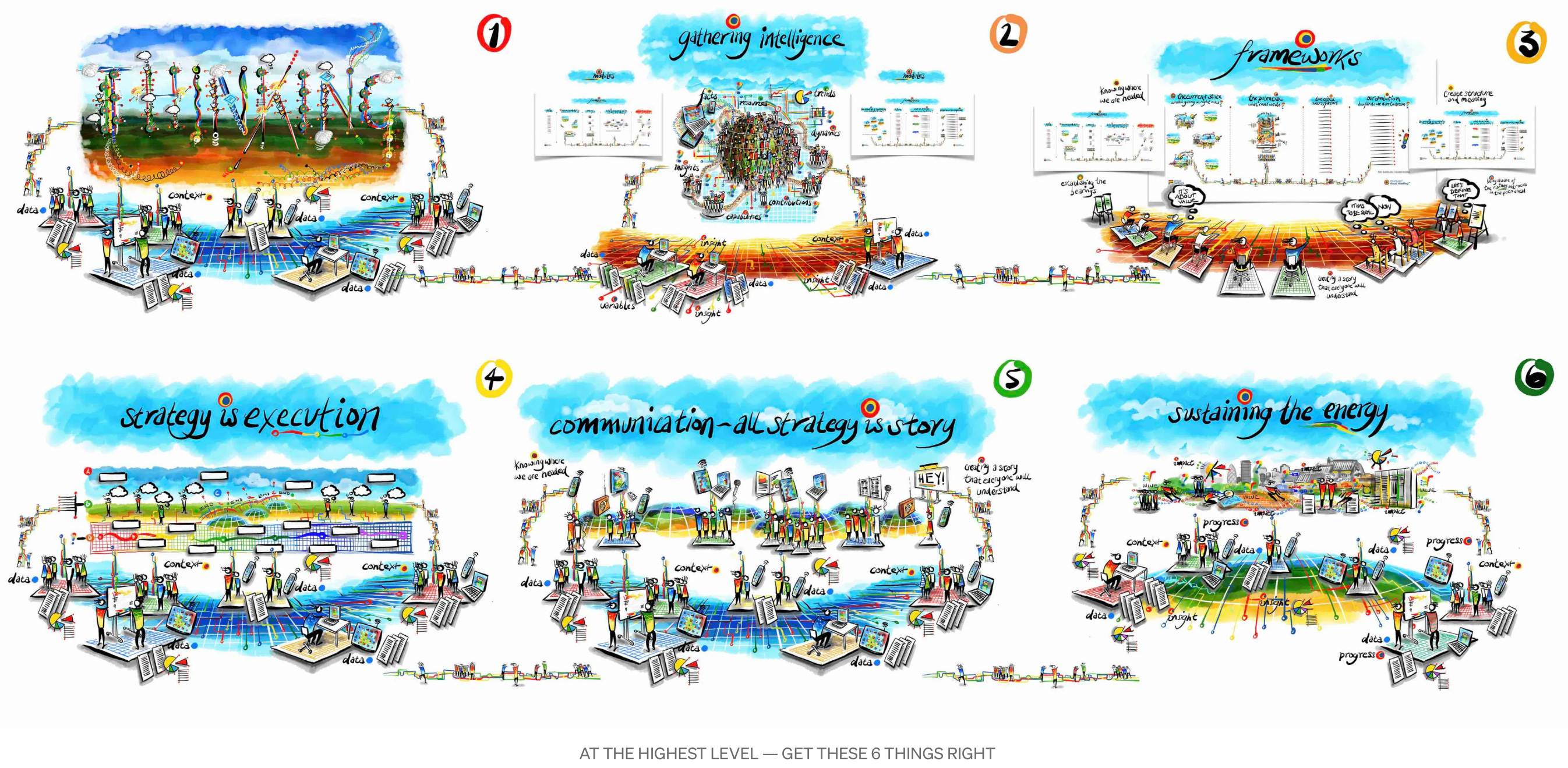
Geoffrey Moore | Agentic AI needs to be deployed atop proven, reliable structures with guardrails built in, not improvised on the fly.
Om Malik | The ‘announcement economy’ is a world of velocity and noise. Coherence matters precisely because everything else is optimised for attention rather than truth. I called it the ‘noise economy’ when I wrote about this last September in a piece called ‘Sound of Silence’.
The Convergence
You might think that these are isolated observations. They are not. Nor are they unique (other than they all appeared in my feed this morning). Bottom line - they are all describing the same shift. A shift that is unspoken - but at the heart of Structured Thought.
Competitive advantage is no longer scale, speed, or even access to AI. It’s coherence - the degree to which every decision, every output, every interaction derives from the same underlying model of reality.
In large organisations, this is nearly impossible. Different departments operate from different mental models and information fragments at every handoff. AI amplifies the disagreement rather than resolving it. But a small team with explicit structure working with a clear operating model, documented constraints, decision rationale, voice guidelines can scale without fragmenting and AI becomes a tool for executing within that coherence, not a way to hope disparate teams accidentally align. This is what structured thought actually means in practice: externalising your logic so thoroughly that it can guide people, process and systems.
Paolo Valdemarin: 🔗 AI as a communication tool
Ben Thompson: 🔗 Microsoft and Software Survival
Joan Westenberg : 🔗 The Coherence Premium
Om Malik : 🔗 The Announcement Economy
Chris Lockhead: 🔗 The Value of Your Value (LinkedIN)
Geoffrey Moore : 🔗 When will Agentic AI Cross The Chasm (LinkedIN)
Bustin' Out

Most organisations are optimised for a world that no longer exists - built for control and standardisation and competing in one that demands responsiveness and fluidity. You can’t patch engagement onto record; the invisible architecture has to shift, and that requires the same structured thinking that got you here, just pointed differently. I published 8 new pages about this over the weekend - but what follows is a more playful approach to the framework.
I Can See Clearly Now
Can you? You have strategy documents, cultural initiatives, leadership programs, performance metrics … you name it … all the pieces from different jigsaws and no picture to even help you understand that you are on a hiding to nothing.
The Business Equation is running - because it always is. You are transforming core resources through process and technology, guided by human intent, into something others recognise as value. Just like every other organisation on the planet.
Are you tuning it or fighting it❓
The Times They Are A-Changin’
Dylan nailed it decades ago, but still we cling to ‘Systems of Record’ built for ‘The Age of Reason’.
Optimized for efficiency, control, predictability. They work brilliantly if the world stays still. It doesn’t. ‘Customer Effective Demand Networks’ have beaten out ‘Producer Efficient Supply Chains’. Your customers expect ‘Engagement’, not ‘Transactions’. Your staff expect ‘Agency, not ‘Instruction’.
The answer❓’Systems of Engagement’
Most organisations intuitively feel this - but perhaps can’t articulate it - and what the hell is a ‘system of engagement’ anyway. So we know it. Feel it even. But we can't move toward it because the foundations are built wrong.
So where do we actually start❓
It’s About the Journey
The sequence determines everything. People First - then Process - then Technology. That adage has been in play for decades, and still we don't understand that it's not just the words. It's the order.
Look around and watch organisations implement technology expecting people to adapt. Trying to change culture and expecting strategy to follow. Build and rebuild structure thinking that the work will fit.
It’s all backwards.
Structured Thought is not a methodology you implement. It's a practice. A way of bringing coherence to complexity by understanding which layer is actually broken.
Get the sequence right and each layer amplifies the next. Get it wrong and you’re fighting yourself while pretending you’re progressing.
Your task determines what structure you actually need, the structure enables your people to think and respond and those people enable you to use technology as a tool, not as a cage.
What happens when you get it right❓
The Space Between
If music is the space between the notes - work is the space between the boxes and when the sequence is right, something shifts. Not because you added more tools. Because you stopped letting them drift.
Your work becomes clear. People understand what problem they’re solving. They can see how their effort connects. They have agency to make decisions without asking permission.
Systems of Engagement start working because they’re built on a foundation that actually exists.
Data starts to be led by people, not leading people. You measure what signals matter. You stop optimising for transaction volume and start optimising for engagement quality.
When people have clarity and agency, they make better decisions faster.
Can you feel it happening❓
Comfortably Numb
We know something’s wrong. We feel it. But we’re comfortable in the numbness.
So we double down on what we know. More frameworks. More meetings. More measurement. We add layers instead of asking which layer is actually broken.
Why do we keep doing this❓
Message In A Bottle
The message is there. It’s been there the whole time, but what you read depends on where you’re standing.
To operations: Your processes are fighting how work actually happens.
To strategy: Your strategy isn’t landing because people can’t see it.
To culture: Your initiatives are disconnected from the actual work.
To technology: Your tools sit unused because the foundation isn’t built.
Same organisation. Same broken architecture. Different message.
People intuitively feel this. But there's no structure to build agreement on what it means. So they pull the bottle in different directions and the message gets ignored.
Operations wants to fix process.
Strategy wants to fix communication.
Culture wants to fix engagement.
Technology wants to fix adoption.
All diagnosing the same patient. All treating different symptoms. Nobody examining the root cause. But, once you see it, the message becomes clear. Not different messages from different angles. One message, finally legible to everyone. That’s when things change.
What happens next❓
People
Your data is led. Your people are first. Not as a slogan. Actually first.
You stop optimizing every system for measurement and control. You start optimizing for clarity and agency.
You invest in understanding your actual task. Then you give people the tools, context, and trust to solve it.
You sense what customers actually need. You let your people think instead of follow.
When you run the Business Equation this way - with clarity at the foundation, structure enabling people, and people enabling technology - the equation stops being something you manage and becomes something that reinforces itself.
But will you let it❓
Where Are We Now
The gap is real. Systems of Record built for yesterday. Systems of Engagement demanded by today. The collision is happening.
But here’s the thing about the message in the bottle. You can read the words, understand them, feel the weight of them. And still choose not to act. Living in your numbness.
Most organisations have already pulled the bottle from the water. They’ve read the message. They know the sequence matters. They know which layer is broken.
And yet.
The question isn’t whether you understand the problem anymore. It’s whether you’re willing to stop everything else to fix it.
Because this takes focus. This takes choice. This takes you - actually present, making actual decisions, staying integrated across functions instead of delegating it all away.
Are you ready❓
My Way
Music is my core and finds its way into everything. Meanwhile, I've published a series of pages on the main site walking through these challenges in detail.
This newsletter tells that story differently - through the lens of music and to remind us all that there is no single way. No absolute.
Paul Anka writes the song. Frank makes it famous. Sid turns it upside down.
That’s the point of the music I chose. Famous songs and unknowns. Covers and originals. Sometimes the covers are better than the original because they contain messages you don’t feel until someone else plays them. One of those videos shows us that everyone has a voice. No matter how insignifcant you might feel - the fact is that anyone can change the future. (Spoiler alert - it’s the Dave Mathews song.)
And then there’s the mix. Because if you do it exactly the same, what’s the point?
Life is a mix. It’s always different. Transformation is just the same.
Your organisation right now is a cover of something that used to work. A remix of systems built for yesterday, trying to make them sing in a world that’s moved on.
Those pages on the web site aren’t instructions. They’re the score.
What you do with them, how you play them, who you bring into the performance, which notes you emphasise, that’s your remix. That’s where the real work happens.
If you reached this far and want to talk more - I certainly do.
Let’s set up some time to explore how Structured Thought can be used to help your business transition into the ‘Age of Experience’.
Bonus: who played the song that inspired the title of this newsletter❓
I’ll tell you❗️
Are They Lying? Or Just Not Thinking?
There’s a disclaimer you see everywhere in investment materials:
“Past performance is not an indication of future results.”
… It's a hedge (pun intended) against the assumption that ‘if it happened yesterday, it happens tomorrow’ because yesterday's consistency isn't tomorrow's guarantee.

(SIDENOTE: Has NYPD always had a branch next door to The Nasdaq? Sure seems convenient - and possibly appropriate?)1
In tech we don’t have such a disclaimer. But we might well need one. Because as AI increasingly takes hold, the pundits and wizards behind the curtains are taking to referencing history as part of our ‘education process’.
The printing press in the 1440s freed information.
… they declare - and then go on to provide a brief history lesson (in case we missed school that day) …
.. information went from ‘scarce’ and ‘controlled’ to everywhere. The Catholic Church wasn’t happy. Wars were fought. But society restructured around it. Literacy exploded. New professions emerged. The world absorbed it.
… all while conveniently omitting the timescale.
The press was invented and 15 years later they printed the first Bible, taking another 50 years to spread across Europe (let alone ‘RoW’) and then a full 160 years passed before it finally fuelled the Reformation.
They would also be advised to have a read of Harari’s latest volume - Nexus, on this particular narrative - but let’s stay on this track for now.
During the Industrial Revolution around the 17th to 18th century (we are reminded that … ) people moved from farms to factories. Labour patterns were inverted. Social structures shattered and rebuilt. There was real societal upheaval. But wages eventually rose. Living standards eventually improved - and the world kept going.
History also tells us that the steam engine first appeared in 1712 with another 40 years passing before James Watt refined it for rotary power and another 50 years to get to the first steam locomotive.
Well - how about electricity? Can’t you just hear their breathlessness?
It ‘arrived’ in the late 19th century and transformed production, communication, daily life simultaneously. It changed when and where people worked, how they lived, what was possible. Massive disruption. Fundamental restructuring. But humans found new equilibrium - and the world was okay.
Again. ‘Timescale’ and ‘Scale’ … 40 years from Faraday’s dynamo to the first light bulb. The first power station served 60 customers. A full 70 years passed before the first 50 per cent of America was electrified.
Don’t you feel so much better when you realise through all this tumultuous change that the world …
absorbed it.
kept going.
was okay.
Makes you feel good. Right?
But there’s more. When you next tune in to the pundits rabbiting on about this ‘AI stuff’ .. and they say;
We’ve been through it all before. We’ll be fine. We’ll be resilient.
Keep that disclaimer ‘front and center’ …
.. because this time it is different.
This time it’s …
Faster – Previous disruptions took generations to fully absorb. This one is compressing years into months.
Affects everyone – The printing press needed readers. Factories needed workers. Electricity needed infrastructure. AI doesn’t require permission or literacy and it’s already everywhere.
Global – There’s no where to escape to. No place where the old rules still apply. No opt-out.
It learns from us. It will learn from itself. (Even though every time I read that my mind jumps to ‘Multiplicity’ with Michael Keaton - but that’s yet another different thread.) The printing press was static. A combine harvester does one thing. But this? It learns from what you feed it, then uses that to ‘improve’ itself, then learns from those improvements. The loop is closing, the tool gets ‘smarter’ (more convincing?) - all while you are re still figuring out how best to use it.
Nobody actually knows how it works. You can understand a printing press. You can understand a combine harvester. Even the people building those things grasped the mechanics. But AI? Even the engineers building it can’t fully explain why it makes the decisions it makes. You’re delegating thinking to something you don’t understand.
It’s adaptive. Every other technology was fundamentally the same yesterday as today. This one changes. Morphs. Responds. You can’t treat it as a fixed tool because it isn’t.
One More Thing
Previous disruptions changed what humans did.
This one changes how humans think .. and maybe what?
If you reached this far and want to talk more - I certainly do.
Let’s set up some time to explore how Structured Thought can be used to help your business transition into the ‘Age of Experience’. Let’s book some time.
Maybe it is a collage❓
About Those Org Charts

Towards the end of last year I had a few questions about my latest rant against org charts. I mean, we all hate them - but it would appear that some think I’ve ‘turned it up to 11’ (RIP Rob Reiner).
They aren’t wrong - because I think the problem requires to be turned up to eleven. It’s louder.

Why Most People Think Org Charts Are No Good
They Don’t Match Reality
Everyone knows the real decision-maker often isn’t the one at the top of the box. Influence ≠ title.
They Hide the Humans
Org charts reduce people to job titles and reporting lines. No context, no relationships, no nuance.
They Ignore How Work Actually Gets Done
Most collaboration is cross-functional, informal, and messy. Org charts don’t show the messy bits - just the illusion of order.
They Leave Out the Important People
Contractors, freelancers, cross-border teams, AI tools, and shadow networks? All notably absent from the chart.
They Reinforce Bureaucracy, Not Agility
Org charts suggest you need to ‘go through the chain’ but we all know that efficiency is about people reaching out to those that they know can get it done.
They’re Static in a Dynamic World
Roles change, teams form and dissolve, priorities shift while the org chart remains frozen in time.
They Signal Status, Not Value
They’re often more about who reports to whom than about who creates real impact.
They Confuse Structure with Clarity
Just because you can draw it doesn’t mean you understand it. Org charts create a false sense of understanding.
They Can Be Weaponized
Who’s in, who’s out, who moved up, who got sidelined. Org charts can fuel internal politics and turf wars.
They Don’t Help You Navigate
If you’re new to an organization and trying to figure out “who to talk to,” the org chart is usually the last thing you turn to.
Org charts have become the wallpaper of corporate life. Ubiquitous, tidy, and comfortingly hierarchical. But they’re wrong - not just in how they look, but in what they imply.
Not only that - but they have become too complicated and detailed with the ever beating drum of The Fractalisation Of Work.
… and …
They are just wrong. Always.
That said - I do fit myself into every org chart out there … I assume the role held in the ‘blue’ box …
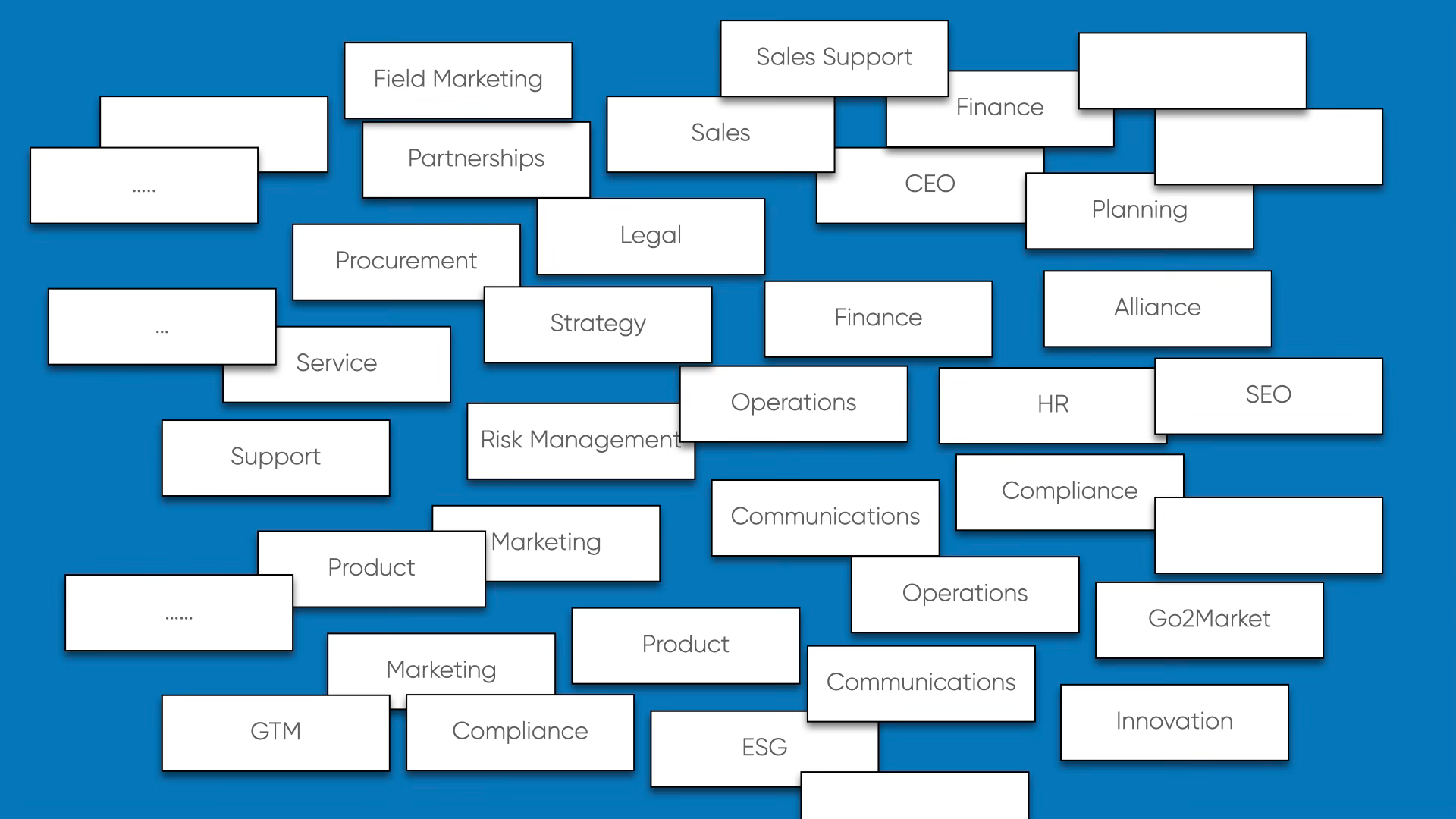
I can so this because work may have fractionalised - but I haven’t - and work happens at boundaries.
5 Found Principles for The Age of Experience

Lenny is Great - and with well over a million subscribers it seems that I might not be the only person that has come to that conclusion. The thing about him is his guests, their openness and their different way of thinking. Take ‘Elena’ on his latest Podcast.
Listen to it. This is why …
Elena is head of growth at Loveable, a company that in just one year since launch has a $200 million ARR and employs just 100 people. That is $2 million ARR per employee.
The whole Podcast is worth a listen, but read this and then look at your organisation …
Elena highlights that she spends 95% of her time on growth innovation. That leaves just 5% on optimisation - the exact inverse of traditional growth teams where the common wisdom suggests that once you find a working loop, optimise it relentlessly.
Let’s Explore more. Trust me - these aren’t the only nuggets - they are just the ones that best highlight the ideas I talk about in this transition to ‘The Age of Engagement’.
Spend 95% of Your Time on Innovation
Why?
In fast-moving categories, optimising yesterday’s playbook makes you irrelevant in 3 months
Competitors constantly launch new features that change the game
The market moves so fast that refinement is pointless before fundamentals shift
“To be ahead of them is not optimisation of the problem. It’s reinvention of the solution.”
Product-Market Fit Isn’t a Milestone - It’s a 3-Month Treadmill
Why?
New LLM releases every 3 months change what’s possible with AI
User expectations change monthly, not yearly
Competitors iterate at light speed
Companies can lose PMF overnight (OpenAI lost 6% market share in a week to Gemini 3)
“Every single AI LLM provider creates a step function change in what is possible every three months.
Hire New Grads and Failed Founders Over Corporate Veterans
Why?
New grads are AI-native and don’t carry ‘baggage’ from old playbooks
Failed founders have high agency and autonomy because they are used to owning everything
Corporate veterans bring assumptions that don’t apply in hypergrowth AI companies
In rapidly changing environments, fresh thinking beats experience
“You need people that don’t look for clarity but can create clarity out of chaos because it is absolutely chaotic otherwise.”
Designers Must Be The First Hire, Not Afterthoughts
Why?
The cost of building software is collapsing (AI does it cheaply)
Functionality parity is inevitable—everything looks similar
Differentiation is now how it feels (emotional design, microinteractions, personality)
“Lovable” is enforced through design discipline from day one, not retrofitted
“The cost of software is coming down so much to develop that we now can actually invest in the emotional feel of the software.”
Build A Minimum Lovable Product, Not Minimum Viable Product
Why?
Viability is table stakes now
Everyone can build a viable product
If your product doesn’t delight on first interaction, users won’t stick around
Emotional response matters as much as functional response
Viability is left back in the 2010s.
Let’s set up some time to explore how Structured Thought can be used to help your business transition into the ‘Age of Experience’.
Announcement
My podcast launches next week and this week was more than a little hectic, so sharing an unpublished story from Travels Without Charlie.
“You’re a long way from home,” I said looking at the man I’d just overheard talking.

“Not really,” he said. “I live just around the corner.” … looking me straight in the eyes and smiling right back.
We both laughed. He knew what I was talking about. We were thousands of miles away from England, the country where we both hailed from and here we were talking to each other as if we were in an English pub. I guess like all people we pick up our accent in others when we hear it - sometimes trying to nail the region of origin, if not the county or even city.

Photo: Sarag Groblechner on Unsplash
I nailed the region. I failed the city. Turns out he moved here 12 years ago, in that time I guess his regional accent had been ‘smoothed over’.
“Alone?”
“No, with my wife and 4 children.”
“Wow … I guess someone made you an offer you couldn’t refuse? I mean that is a big move.”
“It was. A lot bigger than either of us had foreseen - and no - there was no corporate pull, no job waiting. We both just felt that the time had come. We wanted our children to see another part of the world. So we made the decision to jump.
I sometimes wonder if we knew then what we came to learn whether we would have had the courage to make that jump. It was nerve-racking.
You forget the importance of connections. Back in England, I was a known quantity. People called me up with contract opportunities. After we moved here I spent what seemed like an eternity in a wilderness. The only calls were when I made them, introducing myself, hustling. I mean, even when somebody calls you there’s always an element of that - but this was different. Half of the conversations over here were explaining who I was. I was unknown, In the end, I got work but spent the first 4 years on success contracts only - no fixed payment of any kind. Nerve-racking doesn’t even get to it. My oldest was 7 years old, my youngest was 7 months old and my wife was not allowed to work.
The early contracts started paying off in year 5. In year 6 - I started getting the calls.
By then I’d proved myself. It didn’t matter what I’d done somewhere else. What mattered was that I could do it on their turf. I did. I had - in spades. The shoe was now on the other foot. Now they wanted me.
In the next few years, I took fixed fee-only, just so that I could fill-up the bank account again and the early contracts were paying out, so I could invest on top of working the contracts.
That’s been the way now for the past 4 years. Funny third - third - third - never thought of that before.
Would I do it again? I’m not sure. It turned out well in the end - really well - but the journey was gruelling. It was hard on the children. Even harder on my wife.
I guess if you really want something, you should just go for it. That wasn’t me. I wanted something different. I wanted adventures for my family, but ….”
… his voice trailed away as he was shaking his head. He looked up.
“BUT at the end of the day, here I am. In the past 4 years, I have achieved what would only have been a dream back home - and I still have a lot of life in me, so really - I shouldn’t regret it. Had I stayed there, I wouldn’t have known that I’d missed this. Then again, I wouldn’t have missed being close to bankruptcy and the poverty line.
The fact is, you just don’t know. You pick your route through life and live with the consequences.”
‘Regrets’ is a story from the ‘Travels Without Charlie’ series. A recurring theme in the series is one of picking up and starting again. It seems so easy. If you're young, you have nothing to lose. If you are older, but the corporate expat package protects you ... no problem. If it all works out - the stories get told. But when it doesn’t - where are those stories? How do we learn? Keith isn't his real name, but I thank him for opening up his heart and telling his story. In the end it worked for him, but the journey was hard.
My thanks and appreciation for your continued support, comments and attention. Please like the post share through your social channels and forward the email to colleagues, friends and family that want to join us on this journey and do comment or email me your thoughts.
